
Real Solutions. Practical Innovation.
The SafeSpace™ System | Orbital Debris Mitigation Concept
The following outlines one conceptual framework intended to spark discussion, not a finalized engineering design.

1. Autonomous Collection Drones
Robotic units equipped with:
- Steel-mesh debris net systems
- Collision avoidance AI
- Solar charging arrays
- Real-time orbital tracking
These drones are envisioned to match the velocity of debris, capture it, and deliver material to an orbital collection unit.
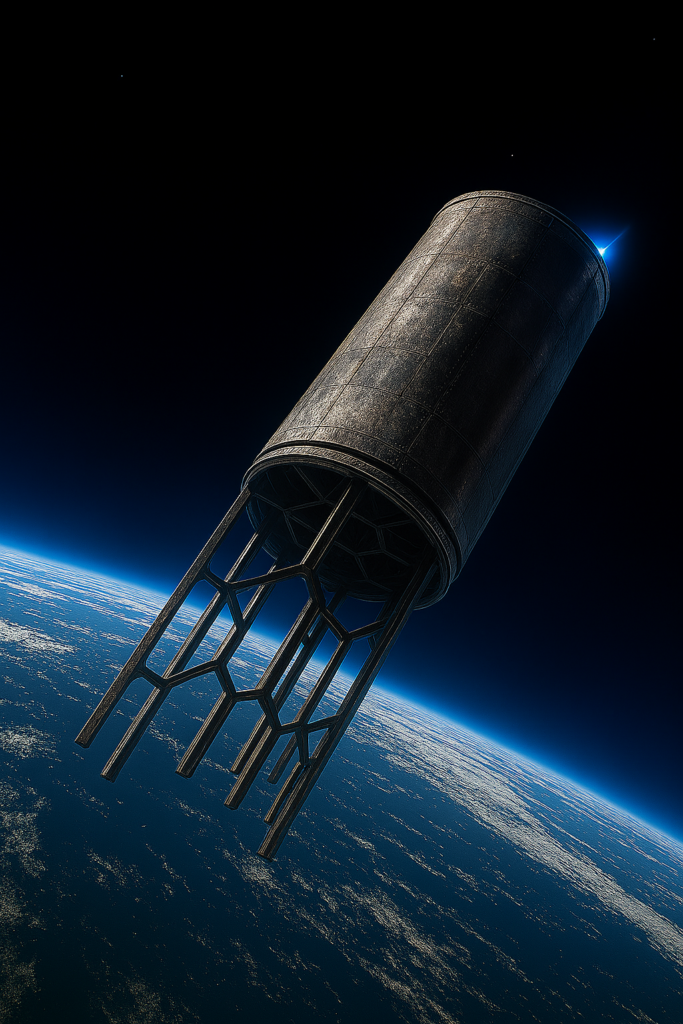
2. Orbital Holding Structure (“The Collection Tube”)
A massive cylindrical structure positioned in stable orbit to store collected debris.
It features:
- Modular expansion
- Shielded internal compartments
- Multi-drone docking
- Future recycling integration potential
- This concept represents the central element of the SafeSpace™ system
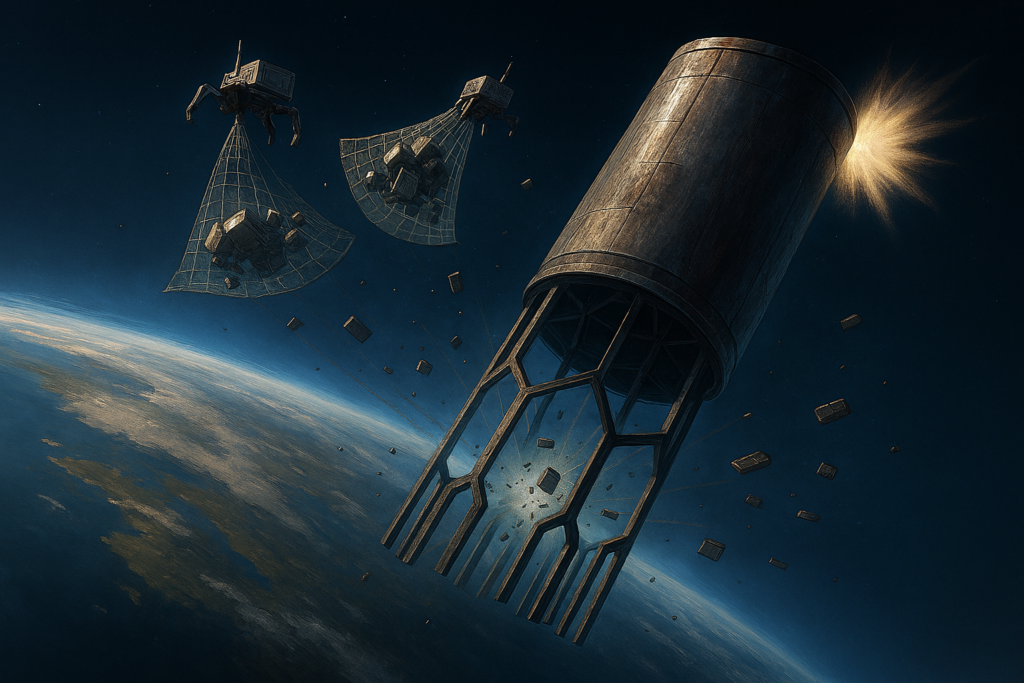
3. Final Disposal Trajectory
Once the structure reaches capacity:
conceptual visualization.

- A propulsion assembly attaches to the unit
- A controlled trajectory is plotted
- The debris-filled structure is guided into a safe solar disposal orbit
- Material would be envisioned to be removed from Earth’s orbital environment through controlled solar disposal concepts.
This approach is intended to support a cleaner and more stable orbital environment.
How SafeSpace™ Works (Step-by-Step Flow)
- Debris Detection
Autonomous drones are envisioned to identify debris using optical and radar sensors. - Velocity Matching
Drones synchronize speed and vector with debris targets. - Capture Phase
A steel-mesh net system secures debris without fragmentation. - Transport
The drone returns captured material to the orbital holding structure. - Storage & Compaction
Debris is deposited and secured inside the collection tube. - Capacity Threshold
When full, the unit is prepared for guided disposal. - Solar Disposal
Debris is safely removed from Earth’s orbital ecosystems.
From Concept to Cooperation → International Cooperation & Governance
Space junk cleanup tech that could ‘shepherd’ debris into Earth’s atmosphere gets US patent | Space