
Real Solutions. Practical Innovation.
The Problem
Earth’s Growing Debris Field
Conceptual visualization of orbital space debris problem
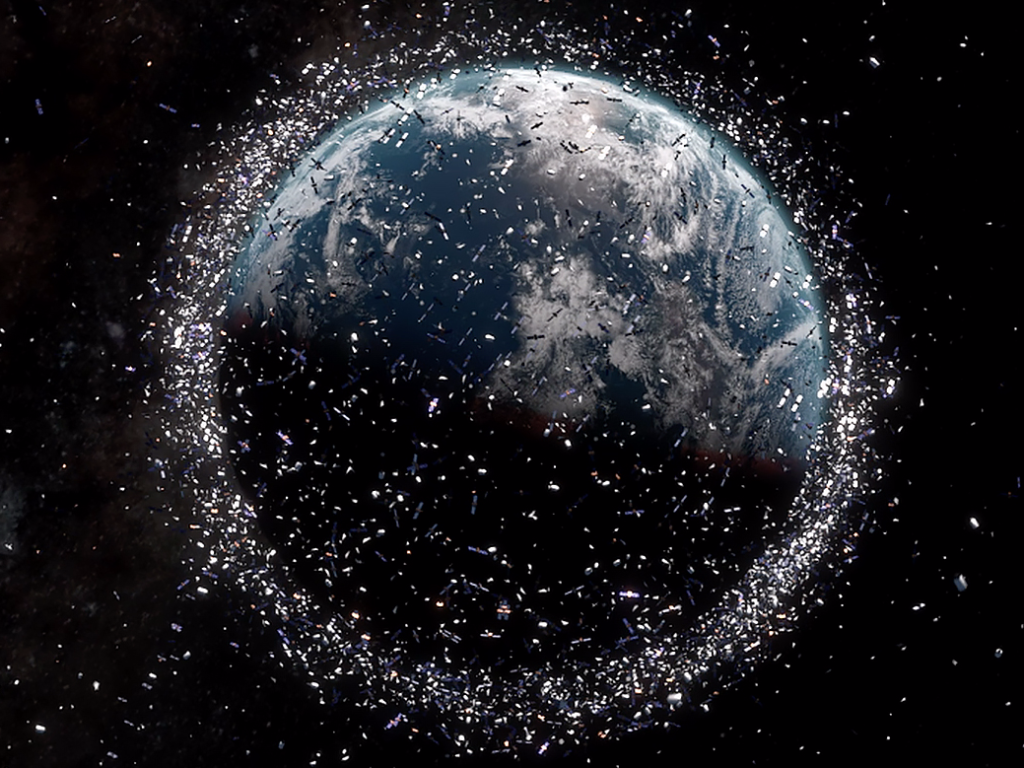
Modern orbit is increasingly crowded with:
- Fragmented satellite components
- Defunct spacecraft
- Rocket boosters
- Collision shrapnel
- Abandoned materials
Even debris smaller than a bolt can travel at over 17,000 mph, posing catastrophic risks to:
- Satellites
- Space stations
- Future missions
- Crewed spacecraft
Without intervention, orbital debris threatens communication networks, global infrastructure, and safe spaceflight.
Recent Real-World Incidents
Recent reporting has highlighted the growing risks posed by orbital debris to crewed missions. In one widely reported case, debris impacts damaged components of the Shenzhou-20 return capsule, requiring extended stays aboard China’s Tiangong space station while safety assessments were conducted.
According to publicly reported information, inspections revealed damage to capsule windows consistent with high-velocity debris impacts, leading to the determination that the vehicle did not meet safety criteria for crewed return. The situation underscored the vulnerability of spacecraft operating in debris-populated orbits and the importance of shielding, redundancy, and contingency planning.
Similar risks have been documented across multiple space programs. NASA’s International Space Station routinely performs debris avoidance maneuvers, and equipment such as Canadarm2 has sustained damage from micrometeoroids and orbital debris, requiring ongoing monitoring and operational adjustments.
Incidents of orbital debris are increasing alongside the rapid growth of satellites and spacecraft. Longstanding theoretical models, including the concept known as the Kessler Syndrome, suggest that cascading collisions could significantly degrade the usability of low Earth orbit. These developments reinforce the need for international debris mitigation standards, advanced tracking capabilities, and coordinated long-term approaches to orbital sustainability.
Source:
MSN – reporting on orbital debris risks and crewed mission impacts
https://www.msn.com/en-us/news/technology/interstellar-comet-secrets-space-debris-crisis/ss-AA1RRCw4
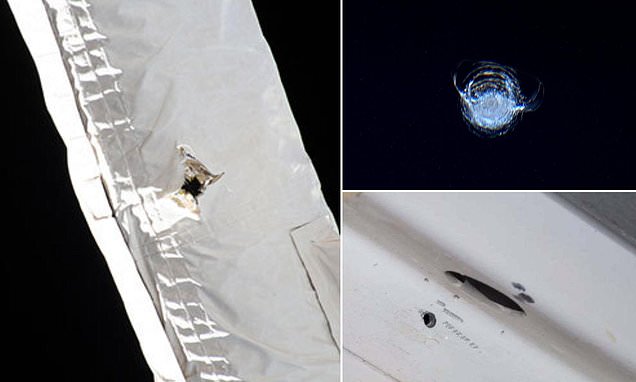
Source:
NASA Technical Reports Server (NTRS)
Observations of MMOD Impact Damage to the ISS
[PDF – NASA NTRS]
“Incidents like these highlight why orbital debris is increasingly viewed as a shared challenge requiring cooperative, long-term solutions.”
SafeSpace™ proposes a long-term, scalable solution.